

Hospital Asset Tracking
Locate infusion pumps, beds, wheelchairs, monitors, stretchers, mobile workstations, and other critical equipment in real time.
High-accuracy healthcare RTLS for hospital assets, staff, patients, and workflows.
LIVE HOSPITAL FLOOR MAP
Reception
Emergency
Patient Ward
Imaging
Interactive live hospital floor map. Select a tracked entity to view illustrative location coordinates.
Healthcare RTLS
CoreHW delivers healthcare RTLS for real-time hospital asset tracking, staff location, patient flow, safety, and workflow visibility. CoreRTLS combines Bluetooth® AoA tags, locators, 3D positioning software, MQTT, REST APIs, and evaluation kits in one partner-ready platform.
Hospitals and care facilities can locate equipment, staff, and patients, analyze movement, identify bottlenecks, and turn location data into faster, better-informed operational decisions.
It turns physical movement into operational data: where IV pumps are, which room a staff member is in, how patients move through care pathways, and where bottlenecks occur.
Healthcare Use Cases
Locate infusion pumps, beds, wheelchairs, monitors, stretchers, mobile workstations, and other critical equipment in real time.

Support faster response to staff duress events, locate the right team member, and understand staffing patterns across departments.

Use patient flow RTLS to identify delays from admission to discharge, automate handoffs, and improve bed turnover visibility.

Support safety zones for memory care, pediatrics, emergency departments, and at-risk patients.

Feed location events into nurse call, EHR, CMMS, EVS, asset management, dashboards, and care coordination tools.

Help senior living communities improve resident safety, staff response, wander management, and location-aware alerts.
Asset Visibility
Hospital asset tracking RTLS is often the fastest path to measurable ROI. When staff can search a dashboard instead of walking room to room, equipment availability improves and unnecessary rentals or purchases can be reduced.
CoreRTLS asset tags and personnel tags are designed for high-accuracy 3D positioning, motion-aware operation, long battery life, OTA firmware updates, and durable IP67-rated use cases.

Location Data Flow
CoreRTLS Tags carried by staff and patients or attached to medical equipment transmit Bluetooth® LE signals, including CTE data for AoA positioning. CoreRTLS Locators receive and measure these signals and forward the measurement data to CoreRTLS Software, which calculates real-time 3D positions for healthcare visibility, alerts, and connected applications.
Partner-Ready Platform
Positioning hardware
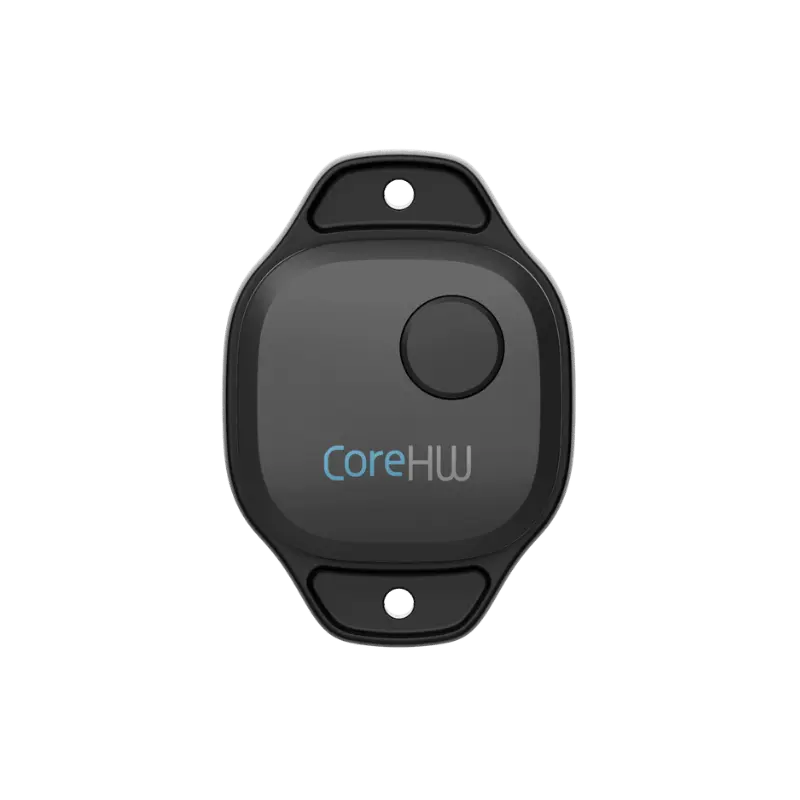
CoreRTLS Tag
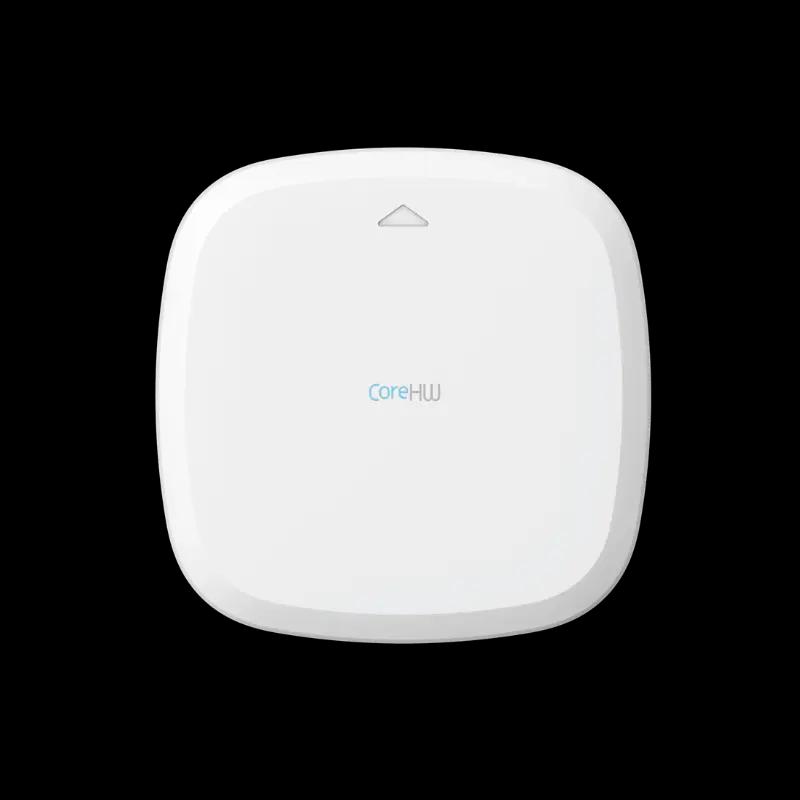
CoreRTLS Locator
Location intelligence
Transforms positioning signals into usable real-time location data.
Data access
Exposes location and event data to connected systems.
Solution delivery
Connects CoreRTLS data to complete customer solutions.
Real-time visibility
Real-time 3D tracking and operational visibility.
For solution providers, CoreHW supplies the physical and middleware layers while partners build the vertical UI, workflows, customer solution, deployment services, and recurring business model.
Right-Sized Accuracy
Healthcare RTLS does not need the same precision everywhere. Use room- or zone-level visibility where it is enough, and increase Locator density only for workflows that need higher precision.
For 10–30 cm positioning, plan for three or more surrounding CoreRTLS Locators with line of sight, typically within about 3–5 m. Lower-accuracy use cases can use wider spacing and fewer Locators, and some room-level cases may work with a single ceiling-mounted Locator.
01 · Room Level
Room-level
02 · Zone Level
Lower precision
03 · Higher Precision
10–30 cm
04 · Highest Precision
Down to 10 cm
Not every hospital area needs maximum precision. Locator density and placement can scale with the required use case.
Technology Comparison
CoreHW Bluetooth® AoA RTLS
Bluetooth RSSI
Wi-Fi
RFID
Barcode
UWB
GPS
Integrations and Interoperability
CoreRTLS is designed to be deployed through solution providers and system integrators. CoreHW provides the positioning platform, while integrators connect it to the hospital’s applications, workflows, and IT environment.
Integrators use the REST API for system configuration and management, MQTT for live position and telemetry data, and OpenTelemetry for operational monitoring.
Solution Provider / System Integrator
Operational Outcomes
CoreHW helps hospitals and healthcare integrators turn location data into measurable gains in asset availability, staff response, patient flow, and daily operations.
Assets
Response
Flow
Cost
Vendor Evaluation
The best RTLS healthcare vendors should prove performance before a full rollout. Use this RTLS healthcare vendor checklist:
Validate performance in real rooms, bays, and corridors.
Compare service effort and replacement cycles.
Asset, wrist, lanyard, and custom options.
REST, MQTT, and event-stream support.
Review locator count and installation effort.
Expand across floors, buildings, and sites.
Check privacy, governance, and network requirements.
Include tags, infrastructure, software, and support.
Assess enablement, support, and commercial flexibility.
Test the system before committing to scale.
CoreRTLS provides solution providers and system integrators with a partner-ready RTLS foundation, including evaluation tools, integration interfaces, deployment support, and a clear path from pilot to production.
Quick Answers
Healthcare RTLS is a real-time location system for tracking hospital assets, staff, patients, and workflows indoors.
Hospitals use RTLS for asset tracking, staff safety, patient flow, vulnerable patient monitoring, and workflow automation.
Hospitals can track IV pumps, beds, wheelchairs, monitors, carts, stretchers, mobile workstations, tools, and other mobile equipment.
Accuracy depends on technology, environment, installation, and workflow. CoreRTLS can deliver 3D positioning down to 10 cm in the CoreRTLS system.
Patient flow RTLS shows where patients are in the care journey, helps automate handoffs, highlights bottlenecks, and supports faster room turnover.
CoreHW is designed to be partner-ready. System integrators and healthcare solution providers can use CoreRTLS as the accurate Bluetooth® AoA RTLS foundation, then build their own dashboards, workflows, alerts, nurse call integrations, EHR connections, asset management tools, and customer-facing applications on top. CoreHW provides the locators, tags, positioning software, APIs, evaluation kits, and technical support so partners can deliver hospital RTLS projects faster and with lower development risk.
High-accuracy healthcare RTLS for hospital assets, staff, patients, and workflows.