
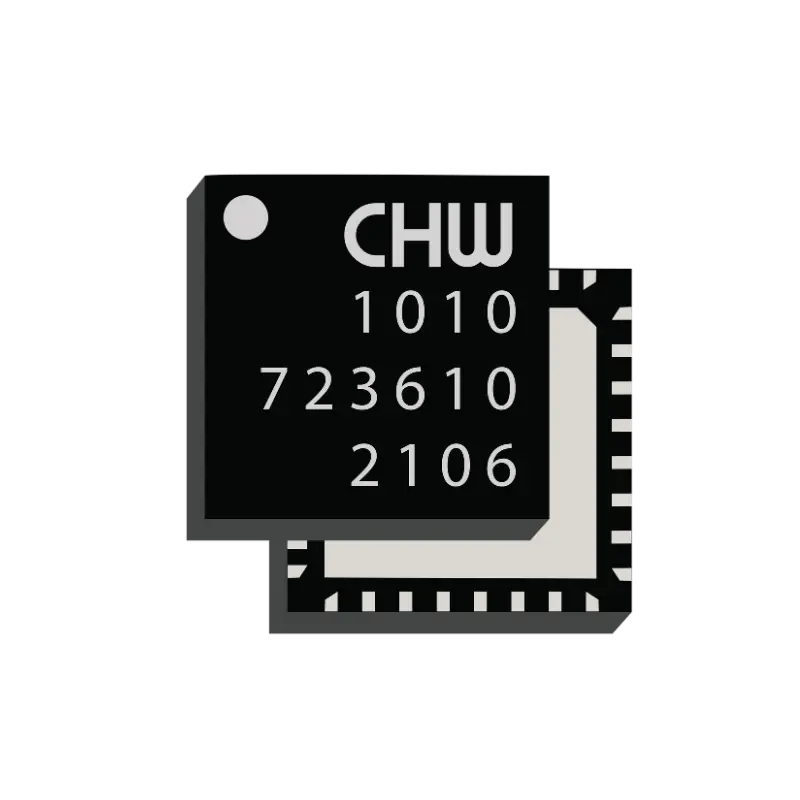
CHW1010 antenna switch
A phase-matched SP16T RF switch for sampling AoA signals or switching AoD transmissions across an array.
Antenna array design, enclosure integration and RTLS modules for accurate Bluetooth® AoA and AoD direction finding.
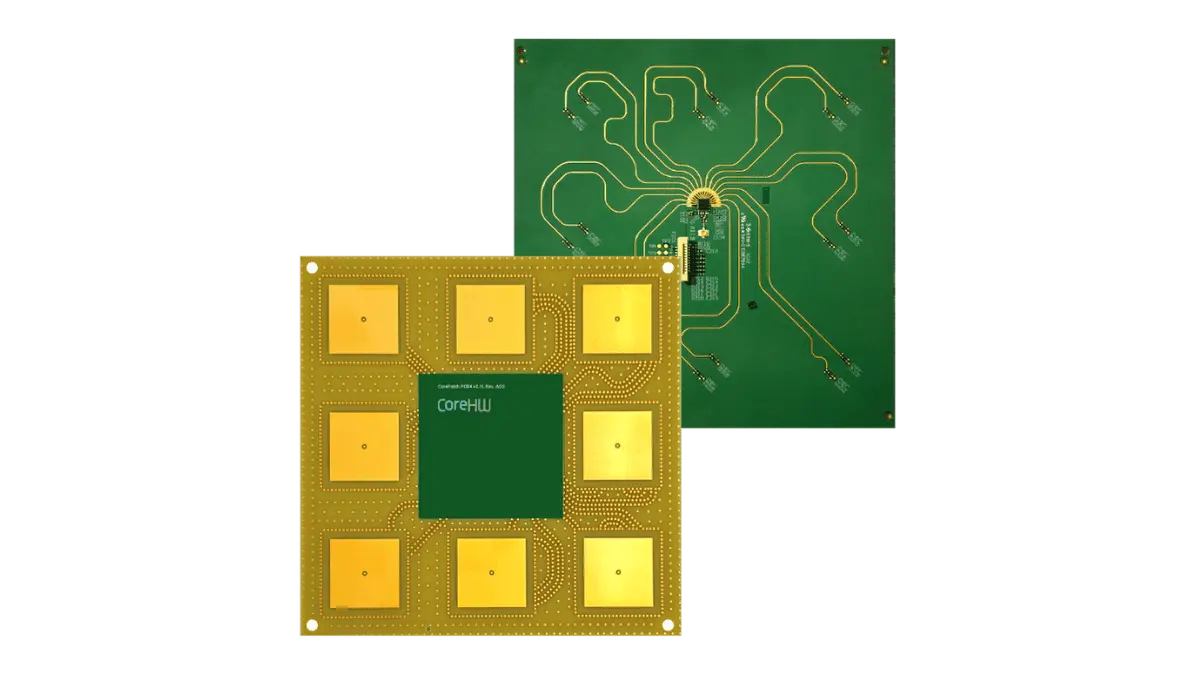
Array Fundamentals
As frequency increases, the physical size of an antenna typically decreases, while path loss in the communication link increases. Compensating for this requires higher antenna gain, usually achieved by narrowing the beam and increasing the effective aperture area facing the signal direction.
For very high gain, reflector antennas such as satellite dishes are a traditional solution, but they require significant overall volume. When moderate gain is sufficient, a more compact approach is to place multiple antenna elements side by side to form an antenna array. Their signals can be combined using a fixed feed network, providing a flat antenna with the required gain and beamwidth.
In many applications, however, the communicating devices are not stationary. While a dish antenna must be mechanically rotated to track the signal direction, an antenna array can steer its beam electronically by adjusting the relative phases of its elements. This approach is commonly known as a phased array or electronically steerable antenna (ESA). Implementations range from phase control of individual elements to architectures with a dedicated transceiver for each antenna element.
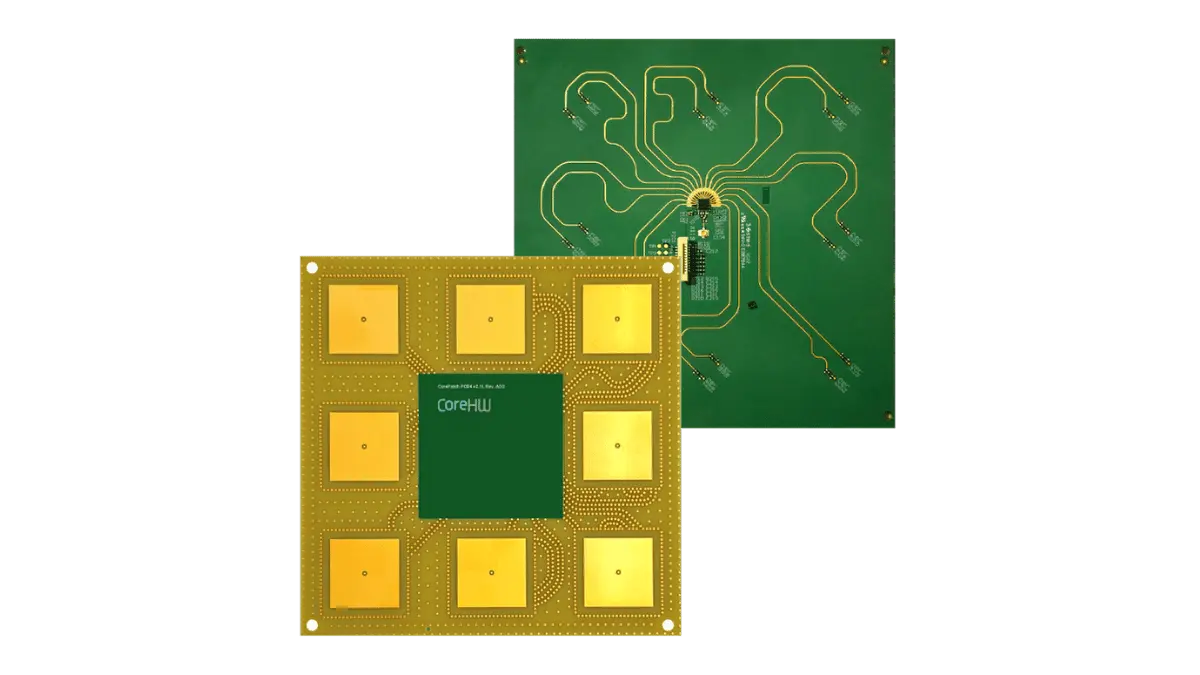
RF System Integration
CoreHW develops complete RF and millimeter-wave IC systems and modules, including antenna switches, LNAs, PAs, mixers, beamformers and supporting signal-chain blocks. The service covers feasibility, circuit and layout design, verification, tape-out support and characterization, helping align the antenna array with the RF front end.
Bluetooth Direction Finding
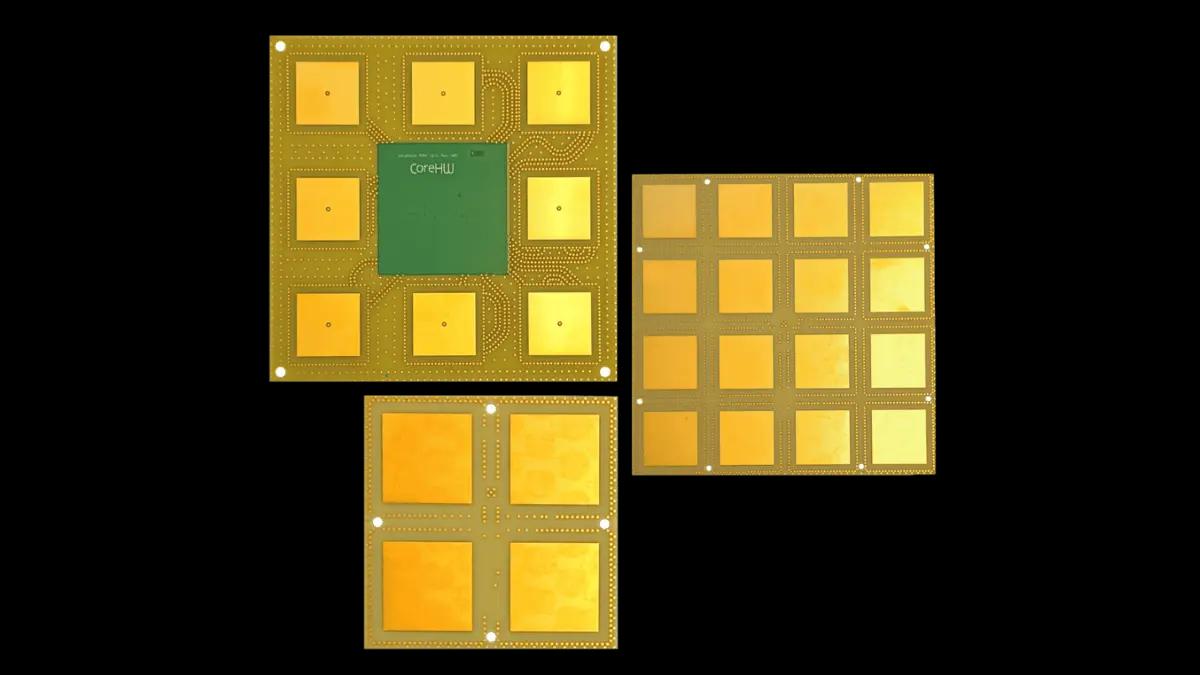
Bluetooth® AoA (Angle of Arrival) and AoD (Angle of Departure) direction-finding technology requires an antenna array as a crucial component for accurate real-time location systems (RTLS).
These arrays use multiple direction estimates to determine the precise location of a tag or beacon. The type of antenna array used can vary depending on the desired coverage area.
As only a single array antenna element operates at any given time, the design of this array differs somewhat from that of (phased) arrays used in telecommunications or radar. An RTLS array can, for example, be a circular array where the signal can arrive from any direction around the array, with the antenna elements exhibiting omnidirectional patterns. Alternatively, the array can consist of unidirectional antenna elements capable of determining the signal direction within a half-space.
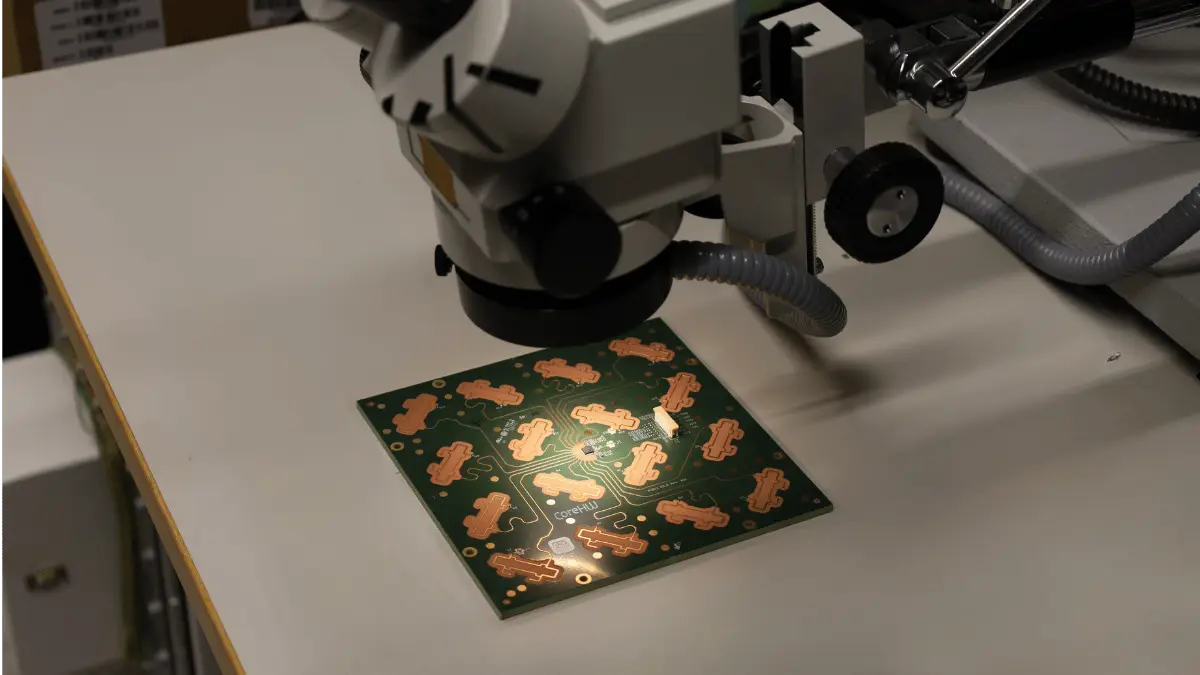
Design Tradeoffs
More elements provide more spatial information and can improve direction estimation, while smaller arrays reduce module size and sampling or processing time. Element spacing should remain below one-half of the free-space wavelength to reduce ambiguous direction estimates.
Actual RTLS performance also depends on array geometry, element efficiency, pattern coverage, phase balance, multipath, locator placement, enclosure materials and positioning algorithms. As the tag-to-array distance grows, antenna efficiency and link margin become more important.
For AoA, an LNA ( low-noise amplifier) can improve receiver sensitivity. For AoD, a PA (power amplifier) can increase transmit link margin. CoreHW's CHW3021 integrates PA and LNA functions for 2.4 GHz ISM systems.
Custom Engineering
CoreHW customizes antenna arrays and modules for the customer's locator, coverage target, PCB, electrical environment and mechanical enclosure. The array is tested and optimized in its final housing and intended operating environment because nearby materials and components can change impedance, efficiency and radiation patterns.
Support can extend from concept and array selection through integration, optimization and final implementation. CoreHW also provides industry-leading positioning algorithms compatible with third-party tags, CoreRTLS Tags or custom tags designed for the application.

RTLS Building Blocks
CoreHW combines array hardware, RF ICs, locators, tags and positioning software, giving system developers compatible building blocks from RF signal capture to calculated position.
A phase-matched SP16T RF switch for sampling AoA signals or switching AoD transmissions across an array.

Integrated PA and LNA functions for 2.4 GHz ISM systems to support transmit and receive link margin.
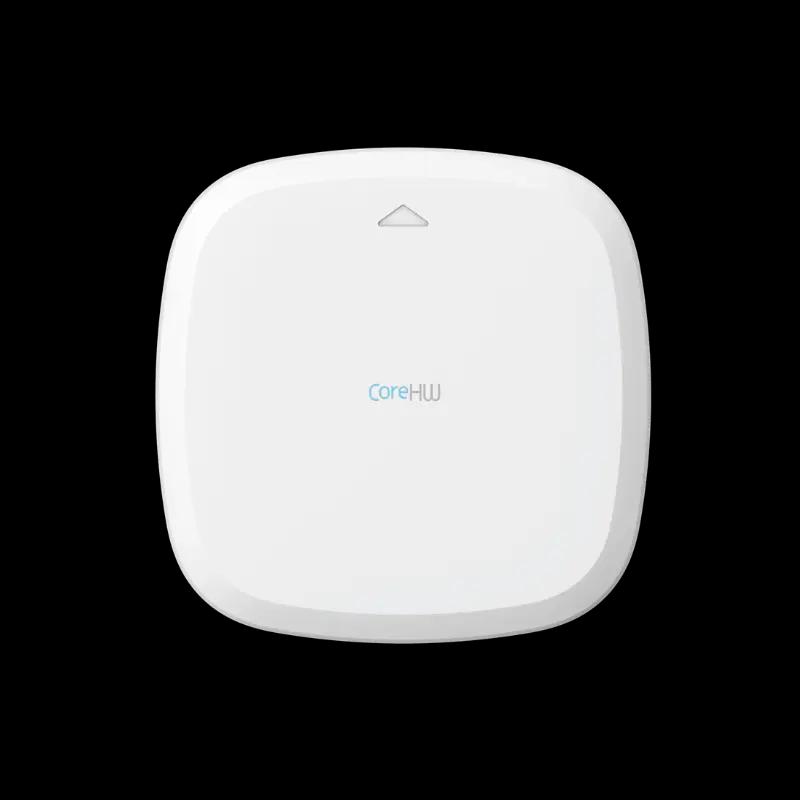
A ready-to-deploy locator for Bluetooth direction-finding and real-time location systems.
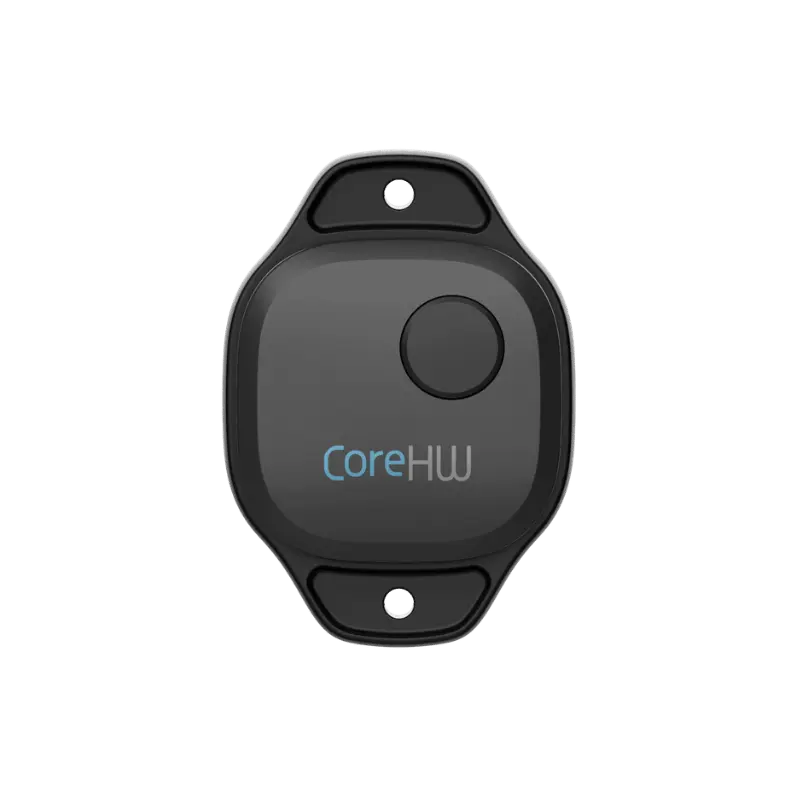
CoreHW tag options for high-accuracy RTLS positioning and application-specific deployments.
RTLS Module Options
CoreHW's CHW1010-based RTLS array modules cover three antenna configurations for different coverage, size, range and accuracy requirements.
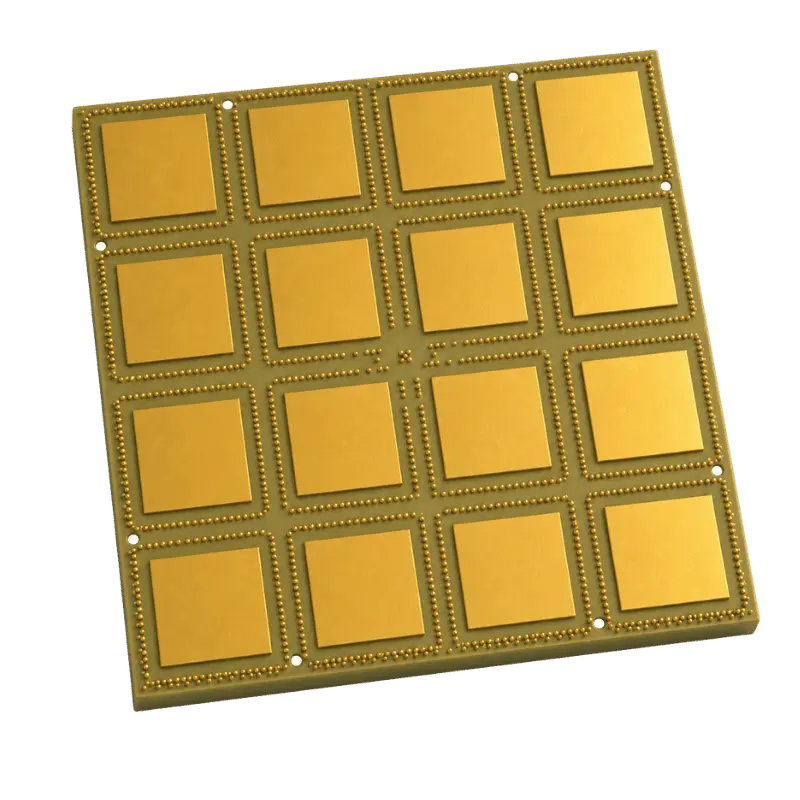
Sixteen patch elements
Higher accuracy and longer-distance coverage for large spaces such as warehouses and sports halls.
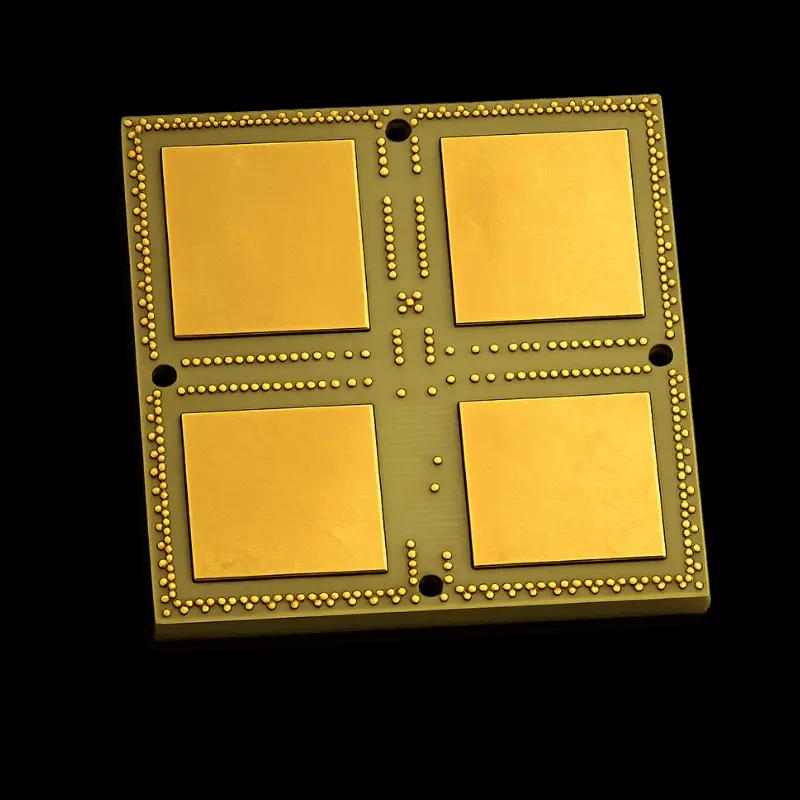
Four patch elements
Compact, shorter-distance coverage for areas such as corridors and patient or hotel rooms.
Frequently Asked Questions
An RTLS AoA or AoD array typically switches one antenna element at a time and calculates direction from phase measurements across the sequence. A phased array drives or receives multiple elements together with controlled phase shifts to form and electronically steer a beam.
No single element count fits every system. More elements can improve angular resolution and coverage, while fewer elements reduce PCB size and processing time. Selection should account for required accuracy and range, element spacing, polarization, multipath, locator geometry and enclosure. CoreHW offers modules with four or sixteen patch elements as starting points.
Yes. CoreHW can adapt the array or module to locator electronics, PCB constraints, coverage requirements, enclosure and operating environment, then test and optimize the integrated design. Support can also include RF front-end components and positioning algorithms for third-party tags, CoreRTLS Tags or custom tags.
Start Your Antenna Array Project
Discuss coverage, accuracy, range, enclosure and integration requirements with CoreHW antenna and RF specialists.