
CoreHW

High-Performance PLL Design for RF, mmWave, and Mixed-Signal ASICs

CoreHW designs custom high-performance PLLs and frequency synthesizers for RF, mmWave, and mixed-signal ASICs, optimized for low phase noise, low jitter, and reliable system integration.
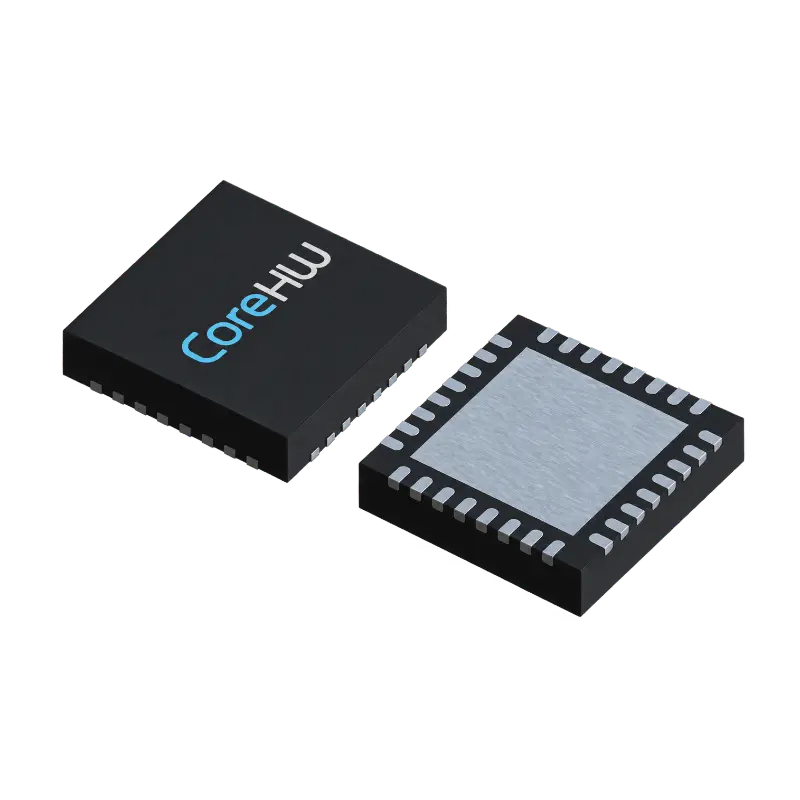
CoreHW PLL integrated circuit for high-performance RF and mixed-signal frequency synthesis.

OVERVIEW

What Is High-Performance PLL Design?

High-performance PLL design is PLL or frequency-synthesizer design in which phase noise, RMS jitter, spur performance, lock time, tuning range, and stability are critical to the target system or application.

A custom PLL can be adapted to the required frequency plan, VCO range, reference frequency, divider architecture, loop bandwidth, output buffering, calibration, control interfaces, power domains, and subsystem-integration requirements.

WHY COREHW

Why CoreHW for High-Performance PLL Design?

RF and mmWave Expertise

High-performance IC design for RF, mmWave, and demanding clocking systems.

Analog, Mixed-Signal, and Digital Integration

Integrated expertise across analog, mixed-signal, and digital ASIC design.

Reusable IP and Process Experience

Proven semiconductor IP and experience across multiple process technologies.

From Specification to Silicon

Clocking design from system specification and verification through integration, tape-out support, and laboratory characterization.

PLL CAPABILITIES

PLL Design Capabilities

CoreHW supports PLL design from system clocking requirements through architecture definition, implementation, verification, tape-out support, and subsystem integration. The design process starts by selecting the appropriate clocking solution for RF local oscillator generation, mmWave chirp generation, reference and system clocking, ADC/DAC clocking, or an integrated PLL subsystem.

End-to-End PLL Development

From clocking requirements and frequency planning to architecture, schematic, layout, verification, tape-out support, and characterization.

Flexible PLL Architectures

Integer-N or fractional-N PLLs with RC, ring, or LC-VCOs, programmable dividers, loop parameters, calibration, SPI control, and low-noise power domains.

From IP to Integrated Subsystems

Standalone PLL IP, customized clocking blocks, or integrated PLL subsystems for RF transceivers and mixed-signal SoCs.

APPLICATIONS

Applications and Clocking Solutions

Telecommunications RF infrastructure representing RF local-oscillator clocking applications.

RF LO Generation

Local oscillator and frequency synthesis for RF transceivers, RF front ends and communication ASICs.

Focus
  • low phase noise, low spurs, fast locking and differential LO distribution.
Automotive radar and sensing hardware representing mmWave LO and chirp synthesis applications.

mmWave LO & Chirp Generation

Carrier and FMCW chirp generation for mmWave radar and other high-frequency systems.

Focus

  • low phase noise, chirp performance and mmWave integration.
Semiconductor wafer representing reference and system clock generation for SoC domains.

Reference & System Clocking

Reference and system clock generation for mixed-signal SoCs, communication ASICs and other integrated systems.

Focus

  • stable locking, synchronization, programmable control and robust integration.
Laboratory RF measurement equipment used for low-jitter ADC and DAC clock characterization.

ADC & DAC Clocking

Low-jitter sampling clocks for ADCs, DACs and mixed-signal signal-processing chains.

Focus

  • low RMS jitter, clean clock distribution and low supply sensitivity.

ENGINEERING CHALLENGES

Engineering Challenges CoreHW Solves

High-performance PLLs must remain stable across process, voltage, and temperature corners while limiting supply, substrate, reference, and fractional noise. They must also lock reliably and integrate with RF routing, package grounding, and digital control.

CoreHW mmWave PLL architecture with fractional-N synthesis, chirp generation, calibration, self-test, and frequency multiplication to 76–81 GHz.
01

Phase-Noise and Integrated-Jitter Budgeting

Define and optimize phase-noise and integrated-jitter performance for the required clocking function.

02

Reference and Fractional Spur Management

Control reference spurs, fractional spurs, and related synthesizer behavior across the target frequency plan.

03

Loop Stability and Lock-Time Optimization

Balance loop bandwidth, phase margin, settling behavior, and reliable locking.

04

Oscillator Trade-Offs

Optimize tuning range, noise, power, and area for the selected RC, ring, or LC-VCO architecture.

05

Supply Isolation and RF Routing

Plan low-noise power domains, differential routing, shielding, and coupling-aware floorplanning.

06

Package-Aware Grounding

Address package grounding, RF return paths, loading, and integration effects early in the design flow.

07

Startup, Calibration, Control, and Testability

Define startup sequencing, calibration, register control, lock detection, and test access for reliable operation and verification.

PROVEN REFERENCES

CoreHW PLL and Frequency-Synthesis References

CoreHW 81 GHz radar transceiver IP test board for RF/mmWave measurement and characterization.

6 GHz RF PLL

CorePLLRF3VCOGF40

Technical Scope
GF 40 nm RF CMOS; 3–6 GHz output; three RF VCOs centered at 7, 10 and 12.5 GHz; RMS jitter below 190 fs; VCO phase noise of −115 dBc/Hz at 1 MHz offset.
What It Demonstrates
Low-jitter RF LO generation for wireless transceivers and other RF systems.

These references demonstrate prior technical scope and measured or specified reference performance. Achievable results in a new project depend on the selected process, architecture, frequency plan, supply, package, integration constraints, and target application.

PROJECT SCOPE

Design, Verification, and Deliverables

CoreHW tailors the deliverables to the project scope. Typical deliverables can include:

01

Architecture and frequency plan

PLL architecture, target frequency plan, reference and output frequencies, VCO and divider selection, loop optimization and documented design trade-offs.

02

Schematic and layout database

Hierarchical schematic and layout databases, block interfaces and implementation data for the agreed design scope.

03

Performance verification package

PVT simulation results, phase-noise and RMS-jitter analysis, spur assessment, lock-time results, loop stability and settling-behaviour verification.

04

Physical verification and sign-off

DRC, LVS and ERC results, together with parasitic-extracted simulations used to verify post-layout performance.

05

Behavioral and AMS models

Behavioral or AMS models and system-level simulation support, where required for ASIC or SoC integration.

06

Control and calibration documentation

Register map, SPI interface, startup sequence, calibration procedure, lock detection and operating-mode guidance.

07

PLL integration guidelines

Power-domain and reference-clock requirements, output loading, RF and clock routing, supply isolation, floorplanning and coupling considerations.

08

Package and grounding guidance

Package-aware layout recommendations, grounding and return-path considerations, and guidance for sensitive RF and clock outputs.

09

Test and characterization support

Measurement plan, laboratory debug support, phase-noise, jitter and spur measurements, lock validation and characterization guidance.

10

Customization and subsystem support

Frequency-plan adaptation, loop tuning, interface updates and integration with RF transceivers, ADCs, DACs, clock trees and mixed-signal SoCs.

FAQ

PLL Design FAQ

It is the design of a PLL or frequency synthesizer optimized for application-specific phase noise, RMS jitter, spurs, lock time, tuning range and stability.

START A PROJECT

Discuss Your PLL Specification

Share your target frequency plan, reference clock, phase-noise, jitter, spur, lock-time, tuning-range, power, and integration requirements with CoreHW.